That queue out front isn’t always proof of popularity
Owners love a line. It looks like energy. It photographs well. Passers-by assume the coffee must be good. But if you’ve ever stood behind the counter during a rush, you already know the quieter truth: a queue can be demand — or it can be friction wearing a popularity costume.
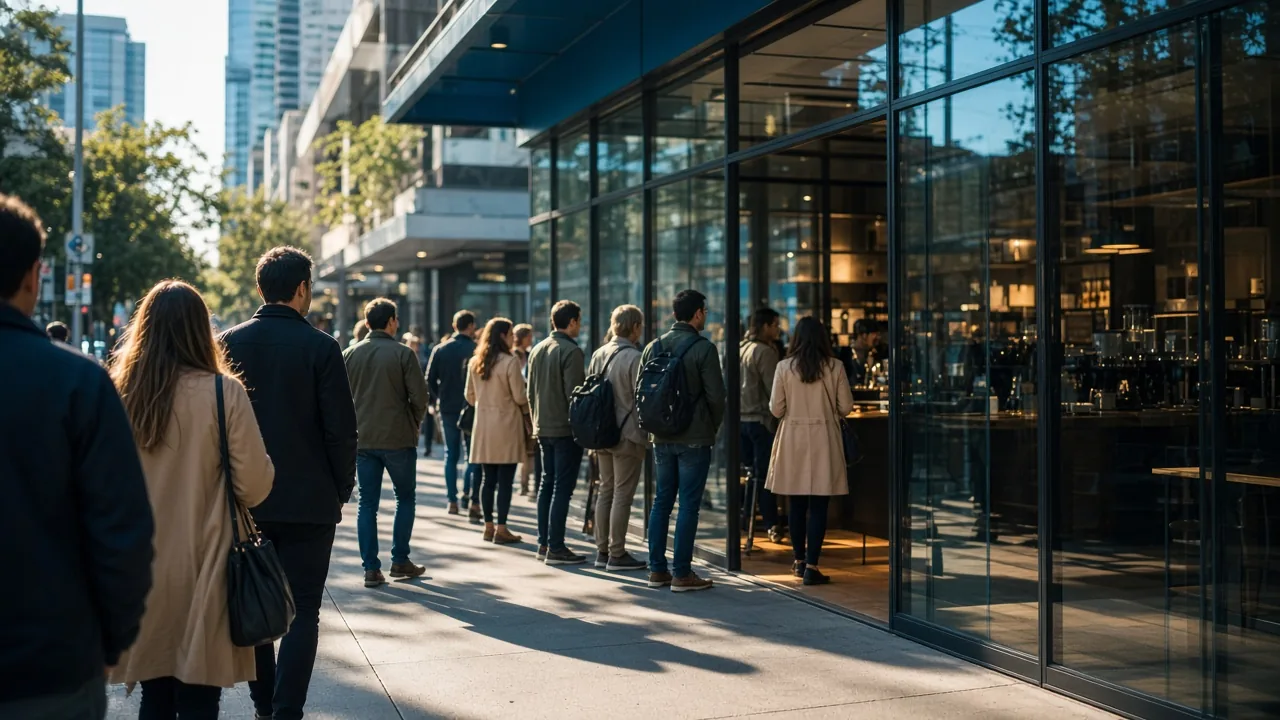
What the queue looks like from the street
From outside, a queue reads as one story: people want what you sell. From inside, it’s several stories at once. Is the barista buried in milk frothing while the register sits idle? Did a takeaway rush stack on top of a dine-in wave? Are people joining the line, glancing at their phone, and peeling off before they order?
You can’t settle that debate with gut feel alone. Gut feel is how you got this far. It’s also how “we were busy all morning” becomes the end of the conversation — when the till doesn’t quite match the vibe.
Popularity and bottlenecks can look identical
A healthy queue means people are willing to wait because the product is worth it. An unhealthy queue means people are waiting because the floor can’t keep up — and some of them won’t wait forever.
The hard part for an owner is that both look the same from the doorway. Same bodies. Same noise. Same “we’re slammed” feeling. The difference only shows up when you can hold two pictures next to each other: how many people came through, and what actually happened once they were on the floor.
That’s not about shaming staff. It’s about seeing where the day breaks — so you can coach, restaff a slot, or fix a layout problem instead of guessing.
Questions worth asking after a “busy” day
- Did footfall climb while sales stayed flat — or did both move together?
- Were people lingering near the entrance without ever reaching the counter?
- Did the queue clear in waves, or sit stuck for stretches you couldn’t leave the machine to notice?
- When the line looked longest, was the floor full of seated customers still waiting for drinks?
None of those need a spreadsheet of invented benchmarks. They need a clearer view of what your cameras already see — paired with what your POS already knows.
How floor analytics helps you tell the stories apart
SoraData is built as an analytics layer on cameras you already have — not a new surveillance system, and not a pitch to watch staff for the sake of watching. The useful question for a cafe or small retail floor is simpler: when people show up, do they convert into sales, and how does time on the floor behave when the line builds?
Qualitatively, you’re looking for patterns owners already sense but can’t prove: busy hours that don’t pay, quiet hours that over-staff, queues that look impressive but leak customers, or rushes where footfall and tickets finally line up the way you hoped.
That same lens pairs well with time-to-serve — the stretch from when someone sits or joins until they have what they ordered. Queue length and serve time often tell one story when you read them together.
See the floor, not just the footage
If you already have cameras and a POS, you don’t need new hardware to start asking better questions about queues, footfall, and sales. Request a trial and we’ll help you wire up what you already own.